Macro Note · SEO
霍尔木兹海峡如何交易
4/6/2026, 3:00:52 AM
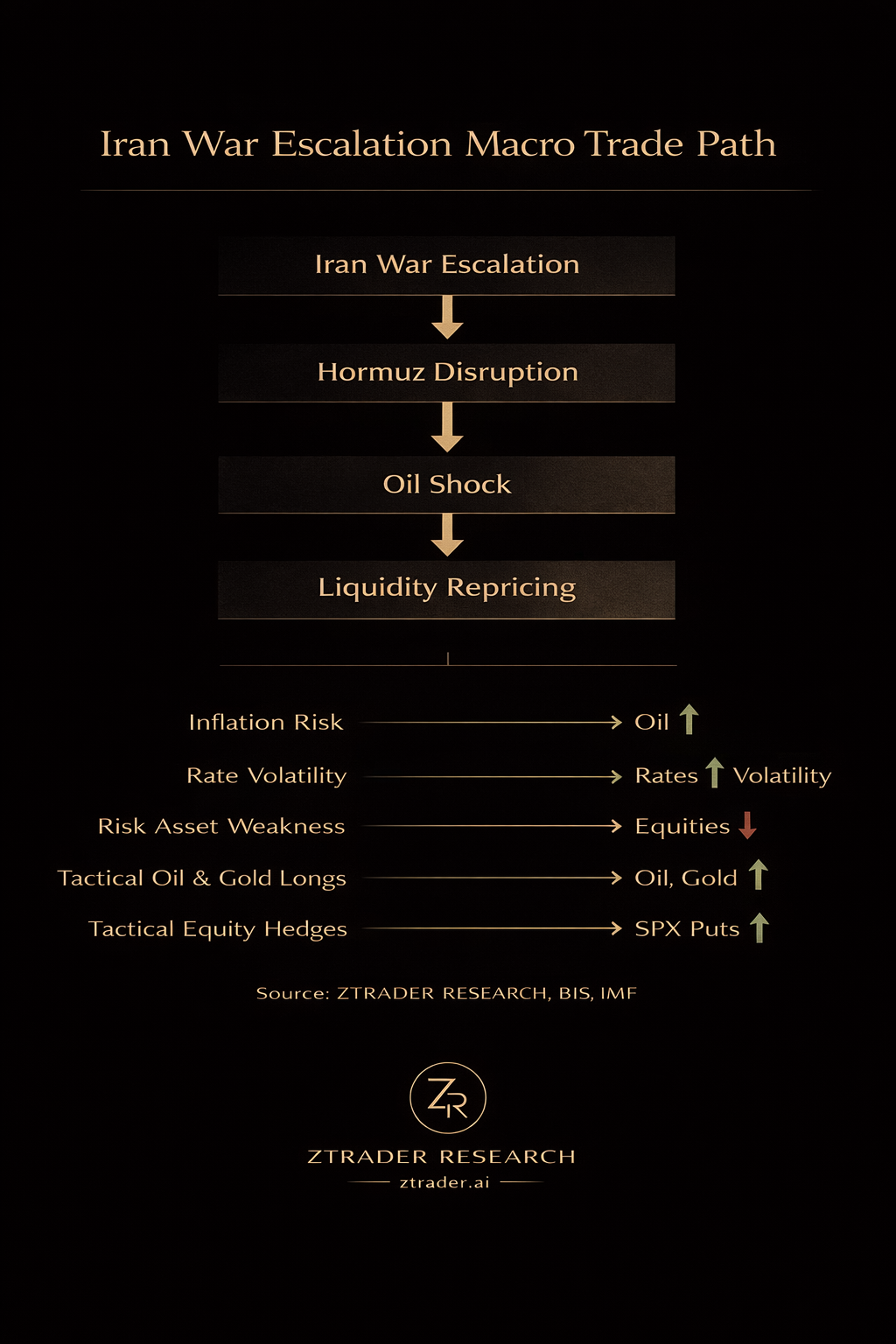
Ztrader Tactical Strategy Sheet
Iran War Escalation · Hormuz Risk Regime
Date: Today Theme: Energy chokepoint shock → Global liquidity repricing
Core Thesis:
This is an energy chokepoint crisis, not just a geopolitical conflict.
这是能源运输瓶颈冲击,不只是地缘政治冲突。
⸻
Core Macro Formula
Iran War Escalation → Hormuz Disruption → Oil Shock → Inflation Risk → Rate Volatility → Risk Asset Repricing
不是:
War → Dollar collapse
而是:
War → Liquidity tightening
因为油价冲击首先影响:
通胀路径 流动性条件 风险偏好
而不是货币体系结构。
⸻
What Happened (Key Developments)
最新结构冲击来自三件事:
1 Oil supply shock
Hormuz disruption affecting up to 15% of global oil supply. 
霍尔木兹影响约15%全球供应。
⸻
2 Energy infrastructure attacks
Iran drone strikes hitting Gulf oil facilities. 
攻击科威特等能源设施。
⸻
3 Escalation risk
US ultimatum to reopen Hormuz. 
美国要求 reopening 否则升级冲突。
⸻
Structural Interpretation
市场真正pricing的是:
Energy logistics risk
不是:
战争 headline
真正宏观逻辑:
Energy transport risk = inflation risk
不是:
Iran = USD collapse
这两个不是同一个变量。
⸻
Scenario Matrix
Scenario Oil USD Gold Equities Rates Regime Escalation ↑↑ ↑ ↑ ↓ ↓ Shock Stalemate ↑ Neutral ↑ Sideways Vol Uncertain De-escalation ↓ Neutral ↓ ↑ ↑ Relief
⸻
情景解释
Escalation:
Oil spike Risk off Gold narrative bid
典型:
Gulf War 1990 Ukraine 2022
⸻
Stalemate:
Oil stays elevated Volatility regime
典型:
Iran sanctions cycles
⸻
De-escalation:
Oil retrace Equity relief rally
典型:
Hormuz reopening scenarios
⸻
Timeline Model
Shock phase:
现在
Energy repricing
Transition phase:
外交谈判期
Volatility regime
Stabilization phase:
物流恢复
Oil normalization
⸻
Cross Asset Reaction Model
Shock regime:
Oil ↑ Gold ↑ USD ↑ Equities ↓ Rates ↓ (growth fear)
符合:
典型 geopolitical shock behavior。
⸻
Key Monitoring Indicators
真正该看:
不是:
Twitter headlines
而是:
Hormuz traffic Tanker insurance spreads Brent backwardation Dollar funding spreads
最关键:
是否出现 funding stress
如果没有:
就是 narrative shock。
不是 systemic shock。
⸻
Market Mispricing
市场常犯错误:
把:
energy shock
当:
monetary regime shift
这是两个层级:
Energy shock → cyclical
Dollar system → structural
短期影响:
价格
长期影响:
结构
⸻
Tactical Trading Sheet
ID Asset View Rationale Trade Path 01 Oil Long bias Supply shock Buy Brent call 02 Gold Long narrative War hedge Buy XAU 03 USD Tactical long Risk stress Long DXY dips 04 Equities Tactical hedge Risk off Buy SPX puts 05 Rates Bullish bonds Growth fear Long UST
⸻
Tactical Insight
专业交易员会:
trade volatility
不是:
trade war outcome
因为:
结果不可预测
波动可交易。
⸻
Risk Trigger Signals
真正危险信号:
Hormuz closure duration
如果:
1 month
可能:
Global recession risk.
如果:
< 2 weeks
只是:
Energy spike event.
⸻
Asset Reaction Speed Ranking
最快:
Oil
然后:
Gold FX Rates
最慢:
Equities earnings repricing
这是典型:
shock hierarchy
⸻
Institutional Insight
War does not break monetary regimes.
Liquidity crises do.
战争不会改变货币体系。
流动性危机才会。
目前:
Energy shock
不是:
Dollar funding shock
⸻
Tactical Summary
Iran war:
Energy volatility event.
Not:
Dollar collapse event.
交易逻辑:
Trade shock Ignore narratives
⸻
Ztrader Tactical Bias
Energy: Bullish volatility
Gold: Tactical bullish
USD: Stable support
Rates: Growth hedge
Equities: Volatility regime
⸻
Trade Decision Tree
IF:
Hormuz stays closed
THEN:
Long oil Long gold Long volatility
IF:
Negotiation headlines
THEN:
Fade oil spike
IF:
Funding stress appears
THEN:
Long USD aggressively
⸻
Final Trading Formula
Energy Shock ≠ Monetary Regime Change
或者:
War moves oil. Liquidity moves the dollar.
⸻
Core Trade Idea
Trade:
Energy volatility.
Not:
Dollar collapse.
⸻
What Ends This Regime
真正结束:
不是:
peace deal
而是:
shipping normalization.
关键变量:
tanker flow
不是:
外交声明。
⸻
Premium Conclusion
Iran shock is a logistics crisis.
Not a monetary crisis.
Energy markets reprice first.
Financial systems follow later.
Unless funding markets break, this remains:
A volatility regime.
Not a systemic regime change.
⸻
Key References
Reuters Energy reports  Guardian Iran conflict updates  BIS FX turnover data IMF COFER reserve data Hormuz crisis overview